April 2026
The idea in one line
A taxpayer picks a town. The town gets the money. The taxpayer gets a tax deduction.
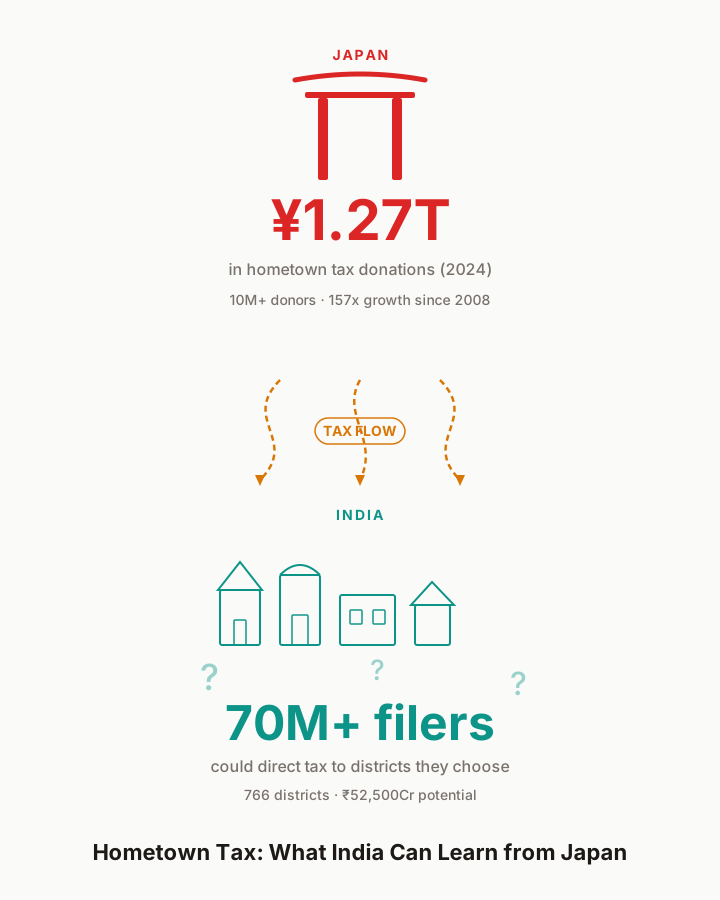
That is Japan’s Furusato Nozei (ふるさと納税), or “hometown tax.” It has existed since 2008. In 2024, it moved ¥1.27 trillion (~$8.4 billion) from cities to towns and villages across Japan. It revived dying communities, funded free childcare in towns of 5,000 people, and turned obscure rural municipalities into nationally recognised brands.
India has the same problem Japan was trying to solve — young people leave villages for cities, tax revenue concentrates in metros, and native places wither. India should adopt this system.
How Furusato Nozei works
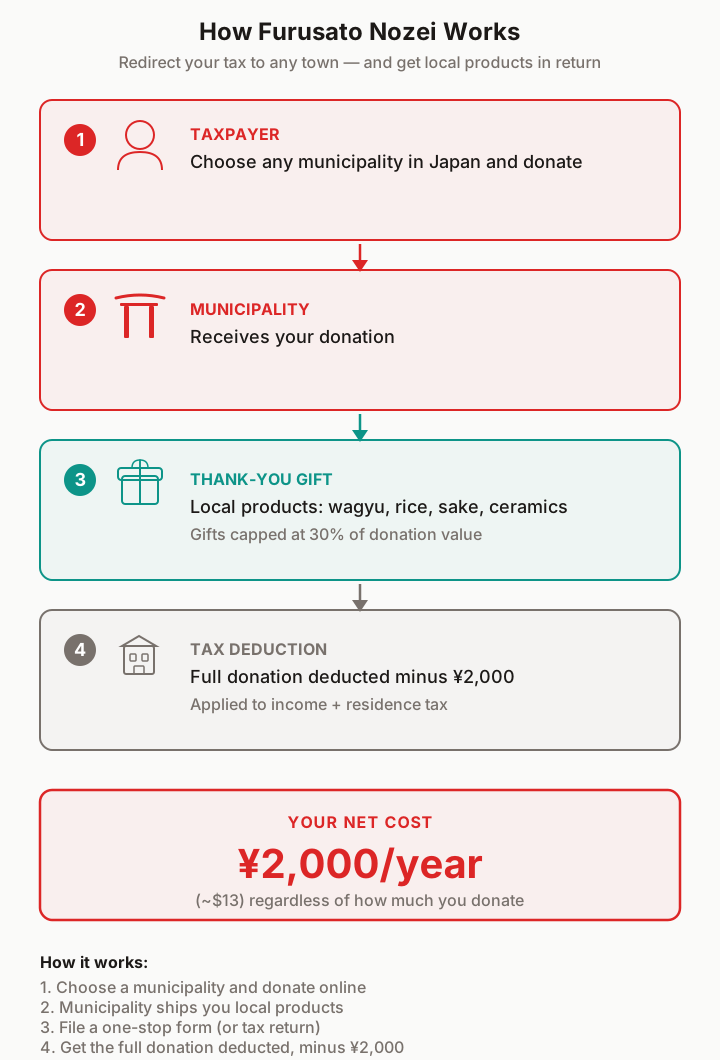
The mechanism is simple:
- Choose a municipality. Any municipality in Japan. Not limited to your hometown — you can pick anywhere.
- Make a donation. Through online platforms like Furusato Choice, Satofull, or Rakuten Furusato Nozei. You browse a catalogue of local products and select your “thank-you gift.”
- Receive local products. The municipality ships you local specialties — wagyu beef, premium rice, sake, crab, handmade ceramics, hot-air balloon rides. Gifts are capped at 30% of the donation value.
- Claim a tax deduction. The full donation minus a flat ¥2,000 (~$13) is deducted from your income and residence taxes. That ¥2,000 is your only out-of-pocket cost for the year, regardless of how many municipalities you donate to.
For salaried workers donating to five or fewer municipalities, a one-stop filing system means no tax return is needed. The deduction happens automatically.
You are not “paying extra tax.” You are redirecting tax you already owe — and getting premium local products in return for ¥2,000.
The upper limit depends on income. A single person earning ¥5 million can redirect about ¥60,000. At ¥10 million income, the limit is roughly ¥171,000. The gift at 30% of that is worth ¥51,000 — for a ¥2,000 personal cost. The value proposition is stark, which is why participation exploded.
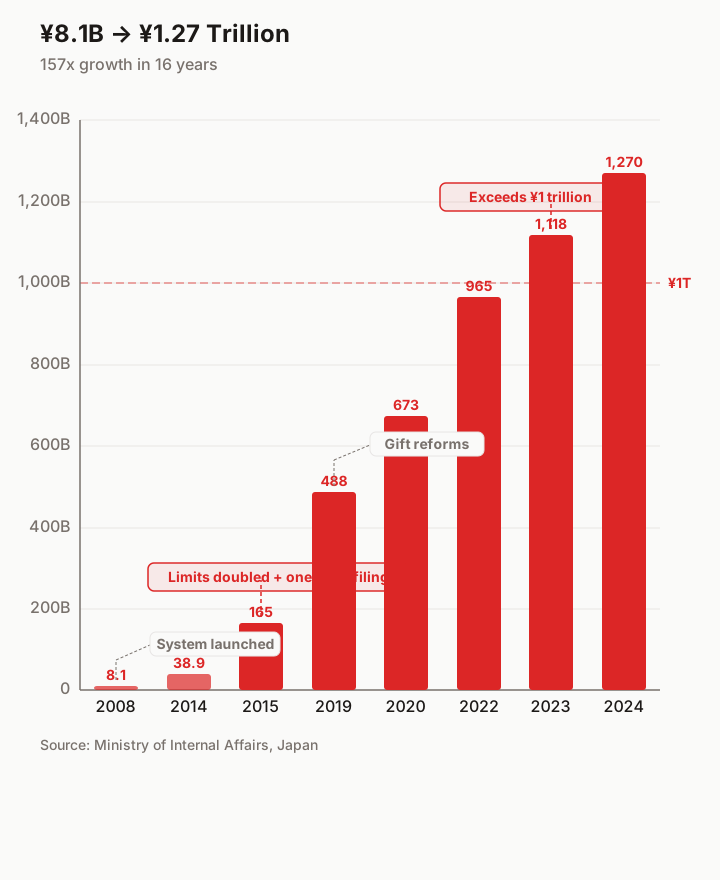
157x in 16 years
| Year | Total Donations | Key Event |
|---|---|---|
| 2008 | ¥8.1 billion | System launched |
| 2014 | ¥38.9 billion | Gift competition heats up |
| 2015 | ¥165.3 billion | Deduction limits doubled + one-stop filing (4.3x jump) |
| 2019 | ¥487.5 billion | Gift reforms: 30% cap, local products only |
| 2020 | ¥672.5 billion | COVID-era boost — more people donate from home |
| 2022 | ¥965.4 billion | Approaching ¥1 trillion |
| 2023 | ¥1.12 trillion | First time exceeding ¥1 trillion; 10M+ donors |
| 2024 | ¥1.27 trillion | Record high — 5th consecutive year of growth |
The 2015 reform was the inflection point. The government doubled the deduction limit and introduced one-stop filing for salaried workers. Participation went from niche to mainstream in a single year — donations jumped 4.3x. By 2023, over 10 million individual donors made 58.9 million separate donations.
The 2019 gift reforms — which capped gift value at 30% and required locally sourced products — were expected to shrink the market. Instead, donations dipped briefly and then resumed growing. The system proved it could survive regulation because the underlying incentives are sound.
How it transformed rural Japan
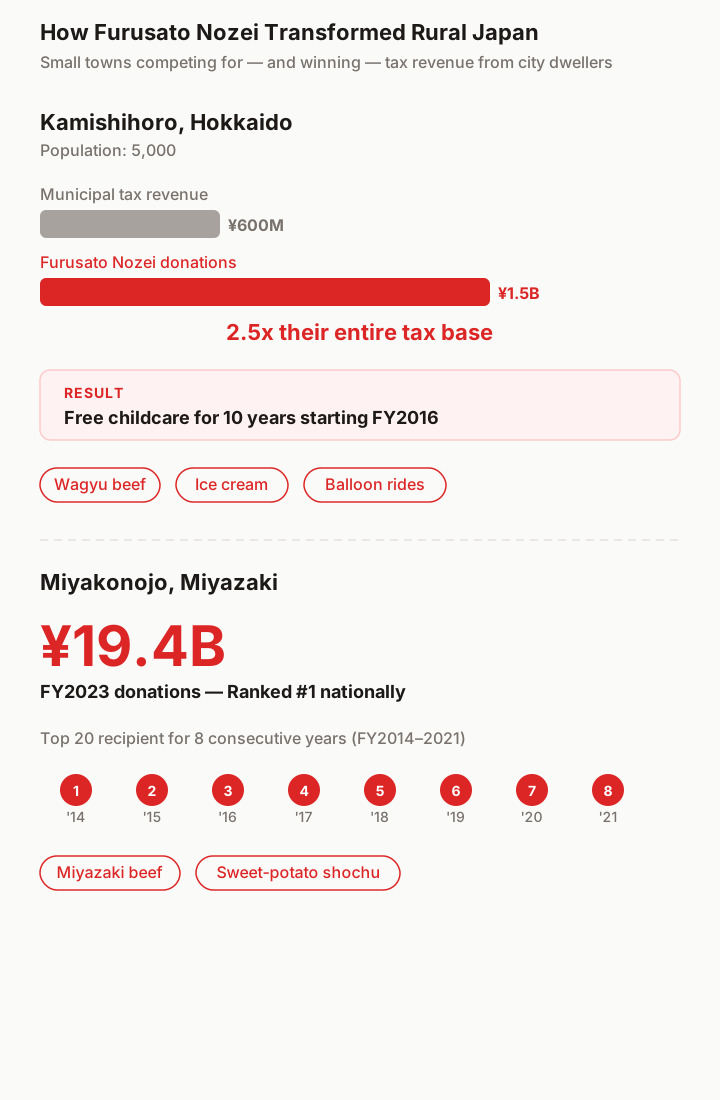
Kamishihoro, Hokkaido — population 5,000
Kamishihoro is a small town in eastern Hokkaido. Its annual municipal tax revenue was about ¥600 million. In FY2015, it received ¥1.5 billion in Furusato Nozei donations — 2.5 times its entire local tax base.
What did Kamishihoro do with the money? It created the “Dream Fund for Child-rearing” and announced free childcare for 10 years starting FY2016. In a country where young families are the scarcest resource for rural areas, this was transformative. Families moved in. A shrinking town started growing.
Its popular gifts: locally raised wagyu beef, artisan ice cream, and hot-air balloon rides over the Hokkaido landscape.
Miyakonojo, Miyazaki — the consistency machine
Miyakonojo is the only municipality that appeared in the top 20 recipients for all 8 consecutive years from FY2014 to FY2021. In FY2023, it received ¥19.4 billion, ranking first nationally. Its strategy: Miyazaki beef and sweet-potato shochu — products so good that donors return year after year.
The competition effect
This is the part that matters most for India. Furusato Nozei created a market for municipal performance. Towns compete for donations by:
- Developing better local products — farmers improve quality, artisans innovate, new local industries emerge
- Building distinct identities — Kamishihoro became the “balloon town,” Chiyoda-machi in Gunma became the “beer town” (home to a Suntory factory)
- Investing in visibility — municipalities hire marketing staff, run campaigns, and actively brand themselves on donation platforms
- Delivering results — donors can often see what their money funded, creating accountability
The competition is real. It reduces net municipal revenue by about 7.5% compared to a non-competitive allocation — but the efficiency gains, product development, and local pride more than compensate.
The losers
Honesty requires acknowledging the other side. In FY2023, Yokohama lost ¥30.5 billion, Nagoya lost ¥17.7 billion, and Osaka lost ¥16.7 billion as residents redirected taxes elsewhere. Tokyo’s 23 wards collectively lost over ¥54 billion. Setagaya Ward’s loss alone equals the cost of renovating two elementary schools.
This is the point. Money flows from where people live to where people care about. Cities lose revenue — but cities also have the deepest tax bases, the most economic activity, and the most alternatives for revenue generation. Rural towns have none of these. The redistribution is the feature, not the bug.
The gift wars and the fix
The system wasn’t always clean. Before 2019, some municipalities went rogue:
- Izumisano, Osaka captured ~10% of all national donations by offering Amazon gift cards — ¥49.75 billion in a single year
- Other towns offered iPads, travel vouchers with no local connection, and gifts worth 50-70% of donations
- It became a shopping festival rather than a civic act
The 2019 reform fixed this: gifts capped at 30% of donation value, must be locally produced, total administrative costs under 50%. Four municipalities were banned. Izumisano fought the ban to the Supreme Court and won — the court ruled the government couldn’t retroactively punish behaviour that was legal when it happened — but the new rules stuck going forward.
The system is healthier for it. Donations are still growing. The gift wars proved that the incentive structure works — it just needed guardrails.
Now look at India
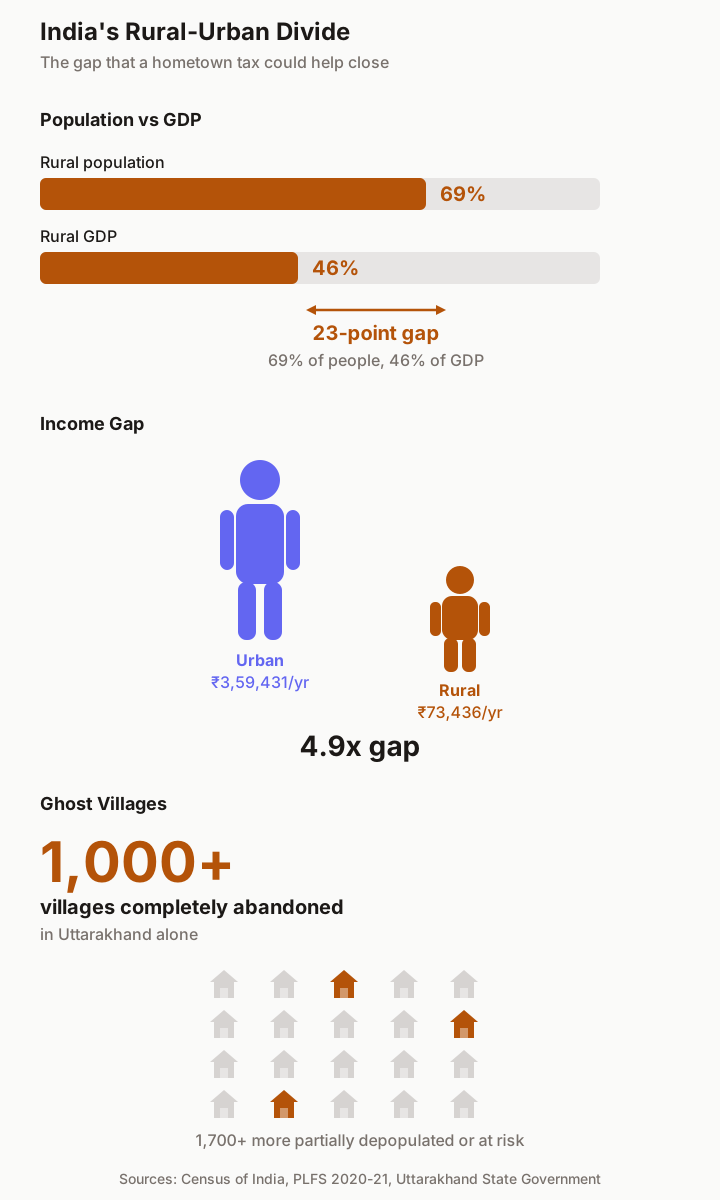
The numbers
| Metric | Rural | Urban |
|---|---|---|
| Share of population | 69% | 31% |
| Share of GDP | 46% | 54% |
| Per capita income (relative) | 40% | 100% |
| Agriculture’s share | 14% of GDP | — |
| Agriculture’s workforce | 44% | — |
The gap is staggering. Rural India holds more than two-thirds of the population but generates less than half the GDP. A rural Indian earns 40 cents for every dollar an urban Indian earns. Agricultural households average ₹73,436 per year; service-sector households average ₹3,59,431 — a 4.9x gap.
Ghost villages
In Uttarakhand alone, over 1,000 villages have been completely abandoned and another 1,700+ are partially depopulated or on the verge of becoming ghost villages. Young people leave for Delhi, Mumbai, Bangalore. They send remittances, but remittances are private transfers — they don’t build roads, schools, or water systems.
Where the tax money goes
India’s income tax is collected 100% centrally. The Finance Commission (reconstituted every 5 years) recommends how to distribute 41% of the divisible pool to states. The formula weights income distance (45%), area (15%), population (15%), demographic performance (12.5%), forest and ecology (10%), and tax effort (2.5%).
This creates two problems:
Problem 1: States that contribute more receive less. Southern states (Karnataka, Tamil Nadu, Kerala, Telangana) generate disproportionate tax revenue but receive smaller shares because their populations are smaller and their incomes are higher. The formula penalises success. This is a growing political fault line.
Problem 2: Districts and panchayats are invisible. The Finance Commission distributes to states. States distribute to districts. Districts distribute to panchayats. By the time money reaches a village, it has passed through three layers of bureaucracy, each extracting overhead and imposing tied-grant conditions. Rural panchayats have almost no independent revenue-raising power. India collects property tax at 0.2% of GDP — the OECD average is 1.1%.
The people who left their villages have money. The villages need money. There is no mechanism connecting the two through the tax system.
The proposal: Hometown Tax for India
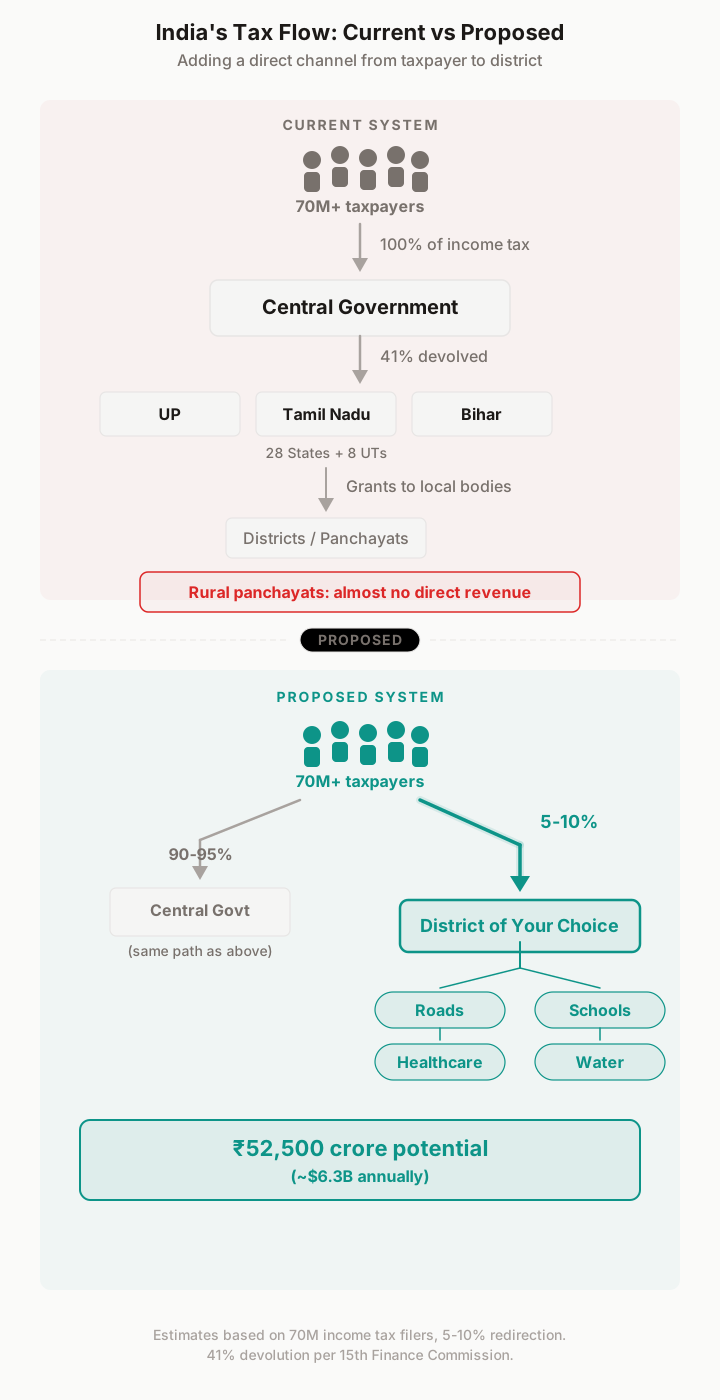
The mechanism
Allow every Indian income tax filer to direct 5-10% of their income tax liability to a district of their choice. Any district. Not limited to their home district.
The rest flows through the existing system: central collection, Finance Commission, state distribution. The 5-10% is the new channel — a direct line from taxpayer to district, bypassing every intermediary.
Why it works
For migrants: A software engineer in Bangalore who grew up in Dharwad can send part of her tax directly to Dharwad district. Not as a charitable donation. Not as a remittance to her parents. As a tax-funded contribution to district infrastructure — roads, schools, primary healthcare, water systems.
For districts: Districts suddenly have a reason to perform. If you build better schools, maintain cleaner water, show visible progress — more people direct their tax to you. Competition replaces complacency. Districts develop identities and reputations, just as Japanese municipalities did.
For federalism: The current system concentrates all allocation decisions in the Finance Commission and state governments. The hometown tax distributes that power to 70 million+ individual income tax filers. Each filer makes a micro-allocation decision. In aggregate, these decisions reveal where people believe money will be best spent. This is fiscal democracy at its most direct.
For the north-south tension: Southern taxpayers who feel their contributions are unfairly redistributed get a direct channel to fund what they care about. The political resentment around Finance Commission allocations decreases because every taxpayer has agency.
The math
India has approximately 70 million income tax filers. If each redirected an average of 5% of their liability — and the average income tax paid is roughly ₹1.5 lakh — that creates a pool of approximately ₹52,500 crore ($6.3 billion) flowing directly to districts chosen by taxpayers.
For context, the 16th Finance Commission recommended ₹9.47 lakh crore over 5 years for local body grants. The hometown tax pool would add roughly 5.5% on top of that — but directed by citizens, not bureaucrats, and flowing to districts that earn it through performance.
What about incentives?
Japan uses local products as return gifts. India could adopt a similar model — or a different one:
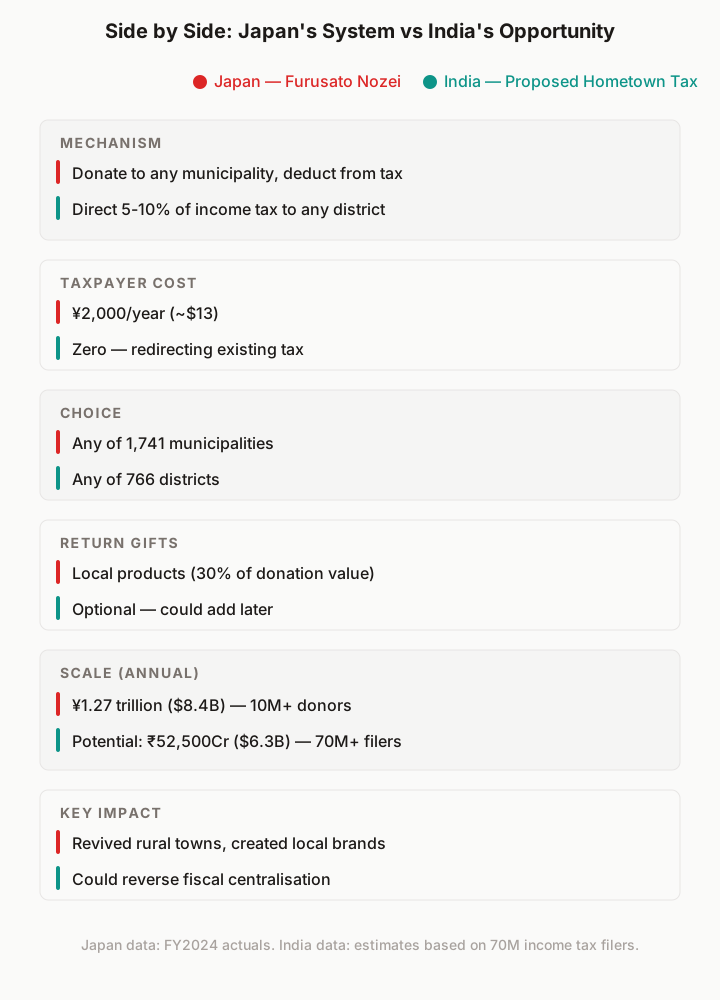
| Dimension | Japan | India Proposal |
|---|---|---|
| Mechanism | Donate to any municipality, deduct from tax | Direct 5-10% of income tax to any district |
| Taxpayer cost | ¥2,000/year (~$13) | Zero (it’s your existing tax) |
| Choice | Any of 1,741 municipalities | Any of 766 districts |
| Return gifts | Local products (30% of donation) | District recognition, local products, or none |
| Scale (2024) | ¥1.27 trillion ($8.4B), 10M+ donors | Potential: ₹52,500 crore ($6.3B), 70M+ filers |
| Competition | Municipalities compete for donations | Districts compete for tax allocation |
| Impact | Revived rural towns, funded childcare, created local brands | Could reverse urban concentration of fiscal power |
India’s version could start without return gifts entirely — the zero personal cost (you’re redirecting tax, not paying extra) may be sufficient incentive. Gifts could be added later as districts develop local product ecosystems, creating the same virtuous cycle Japan discovered.
Precedent already exists
An explicit policy proposal modeled on Furusato Nozei already exists for Uttarakhand, where the ghost village crisis is most acute. The proposal suggests allowing taxpayers with ancestral ties to hill villages to earmark up to 30% of income tax for development projects in their ancestral gram panchayats. Conservative estimates put the revenue potential at ₹200 crore annually — transformative for hill villages with budgets measured in lakhs.
Zoho’s rural office network demonstrates the private-sector version: over 100 offices in tier-2 cities and villages, 3,000+ employees in rural locations, and a documented 50-60% income increase in the Tenkasi area over 7 years. What Zoho did with corporate offices, the hometown tax does with public revenue.
What needs to happen
-
Pilot with one state. Uttarakhand is the obvious candidate — the proposal already exists, the crisis is documented, and the diaspora is identifiable. Allow Uttarakhand-origin taxpayers to direct 5% of income tax to any district in the state.
-
Build the platform. A national digital platform where taxpayers browse districts, see development metrics, choose their allocation, and track how funds are spent. Japan’s platforms (Satofull, Furusato Choice) processed 58.9 million transactions in FY2023 — India’s UPI infrastructure can handle this trivially.
-
Make it zero-friction. Integrate with the income tax filing process. A single dropdown: “Choose a district for 5% of your tax.” Default: no allocation (money flows through existing channels). Opt-in, not opt-out.
-
Require transparency. Every district that receives hometown tax funds must publish quarterly spending reports on the platform. Taxpayers who allocated to that district get notified. Accountability through visibility.
-
Add return gifts later. Once districts develop local product ecosystems, allow them to offer thank-you gifts capped at 30% of the allocation value. This creates demand for local products, local manufacturing, local branding — the same virtuous cycle that turned Japanese towns into recognised brands.
-
Expand nationally. After the pilot validates the model, extend to all states. Any taxpayer can direct to any district. A Tamil engineer in Bangalore directs to her native Tirunelveli. A Bihari teacher in Delhi directs to his home district of Madhubani. A Gujarati founder in Mumbai directs to Kutch.
The people who left their villages have the money. The villages need the money. Connect them through the tax system.
This is federalism that works
Japan’s Furusato Nozei proved that when you give individual taxpayers the power to allocate a fraction of their tax, three things happen:
- Money moves from where it concentrates to where it’s needed. Not through bureaucratic redistribution, but through millions of individual choices.
- Receiving communities compete to deserve it. They build better, govern better, and develop distinct identities.
- The emotional connection between migrants and their native places becomes material. Nostalgia converts into infrastructure.
India has 70 million income tax filers, 766 districts, and a rural-urban divide that is widening every year. The mechanism exists. The technology exists. The precedent exists. The only thing missing is the policy.
Let people send their tax home.